9 Reasons Roofing Companies Are Worth the Investment in Dallas

Picture this: You’re sitting in your living room on a Tuesday afternoon when you notice it. A small, brownish stain spreading across your ceiling like a slow-motion disaster. It wasn’t there last week. Or… was it? You grab a bucket, slide it under the drip that’s starting to form, and think to yourself, “I’ll just patch that up myself this weekend. How hard can it be?”
A few YouTube videos later, you’re on your roof in 95-degree Dallas heat, caulk gun in hand, absolutely convinced you’ve solved the problem. Three weeks pass. The stain comes back – bigger this time. And now there’s a subtle smell of mildew creeping through your upstairs hallway.
Sound familiar? You’re not alone. Not even close.
Dallas homeowners deal with this exact scenario constantly, and honestly, it makes complete sense why. We’re a city full of capable, independent people who know how to get things done. We fix our own fences, change our own oil, troubleshoot our own HVAC issues. So when the roof starts acting up, the instinct is to handle it ourselves. Why pay someone else when you’ve got two hands, a Saturday morning, and access to the internet?
Here’s the thing though – roofing isn’t just another home project. It’s one of the few areas where the gap between “done” and “done right” can cost you tens of thousands of dollars.
Why Dallas Specifically Changes Everything
And we’re not just talking about any roofing situation here. We’re talking about Dallas roofing – which is, genuinely, its own category of challenge. This city puts roofs through the wringer in ways that homeowners in other parts of the country simply don’t experience. You’ve got brutal summer heat that pushes surface temperatures past 160 degrees. Hailstorms that can go from zero to golf ball-sized in minutes. Those spring thunderstorms that seem to hit every neighborhood except the one the weather app was tracking. Flash flooding. High winds. And then, every few years, an ice storm that turns the whole metroplex sideways.
Your roof isn’t just sitting up there looking pretty. It’s actively battling conditions that accelerate wear, compromise materials, and create vulnerabilities that aren’t always visible from the ground – or even from a quick DIY inspection.
That’s where professional roofing companies come in. And that’s exactly what we’re going to talk about today.
What You’re Actually Weighing Here
The real question isn’t “can I afford a professional roofer?” – though we’ll absolutely get into the cost piece, because it’s probably not what you’re expecting. The real question is whether you can afford the compounding problems that come from cutting corners on one of your home’s most critical systems.
Think about it this way. Your roof is essentially the lid on your biggest investment. Everything underneath it – your structure, your insulation, your electrical systems, your walls, your furniture, your family’s comfort and health – depends on that lid doing its job correctly. A small leak ignored for six months doesn’t stay small. It migrates. It hides inside wall cavities. It grows mold in places you won’t find until a home inspector is walking through with a future buyer, and suddenly you’re looking at repair bills that dwarf whatever you thought you were saving.
Professional roofing companies aren’t a luxury for Dallas homeowners who like spending money. They’re a practical, financially sound decision – one that more and more homeowners are recognizing, especially after the last few years of increasingly intense storm seasons.
So we’ve put together nine specific reasons why hiring a professional roofing company in Dallas is genuinely worth the investment. Not vague, feel-good reasons, either. Real, concrete ones – from how they navigate insurance claims after hail damage (which, if you’ve been through it, you know can feel like a part-time job) to why their material access and warranties simply can’t be replicated with a weekend trip to Home Depot.
Whether you’re dealing with an active problem right now, thinking about replacing your roof before it becomes one, or just trying to figure out what’s actually true versus what’s just a sales pitch from a door-to-door roofer after the last big storm… this is for you.
Let’s get into it.
Why Dallas Roofs Have It Harder Than Most
Okay, so here’s something people don’t always think about when they move to Dallas – the weather here is genuinely brutal on roofs in a way that’s kind of unique. We’re not just talking about summer heat (though 100°F days in August are no joke). We’re talking about a climate that swings from ice storms in February to golf-ball-sized hail in April to sustained scorching heat by June. That’s a lot of stress on what is essentially a giant shield sitting on top of everything you own.
Think of your roof like the soles of your shoes. If you only ever walked on carpet, they’d last forever. But if you’re hiking rocky trails, crossing hot pavement, and occasionally trudging through sleet – those soles wear down fast. Dallas roofs are doing the hiking-through-everything version of weather, year after year.
The Hail Problem Is Bigger Than You Think
Here’s the counterintuitive part that surprises a lot of homeowners: hail damage often isn’t immediately visible from the ground. You might walk outside after a storm, look up, think “looks fine to me,” and go back to your morning coffee. But up on that roof? The shingles have taken hits that cracked the protective granule layer – basically the sunscreen of your roof – leaving the underlying material exposed to UV rays, moisture, and heat.
Dallas sits squarely in what meteorologists call “Hail Alley.” That’s not a metaphor, that’s an actual designation. The conditions here – warm Gulf moisture colliding with cold fronts dropping down from the plains – create ideal hail-producing thunderstorms with alarming regularity. Over time, even “minor” hail events stack up like little insults to your roof’s integrity.
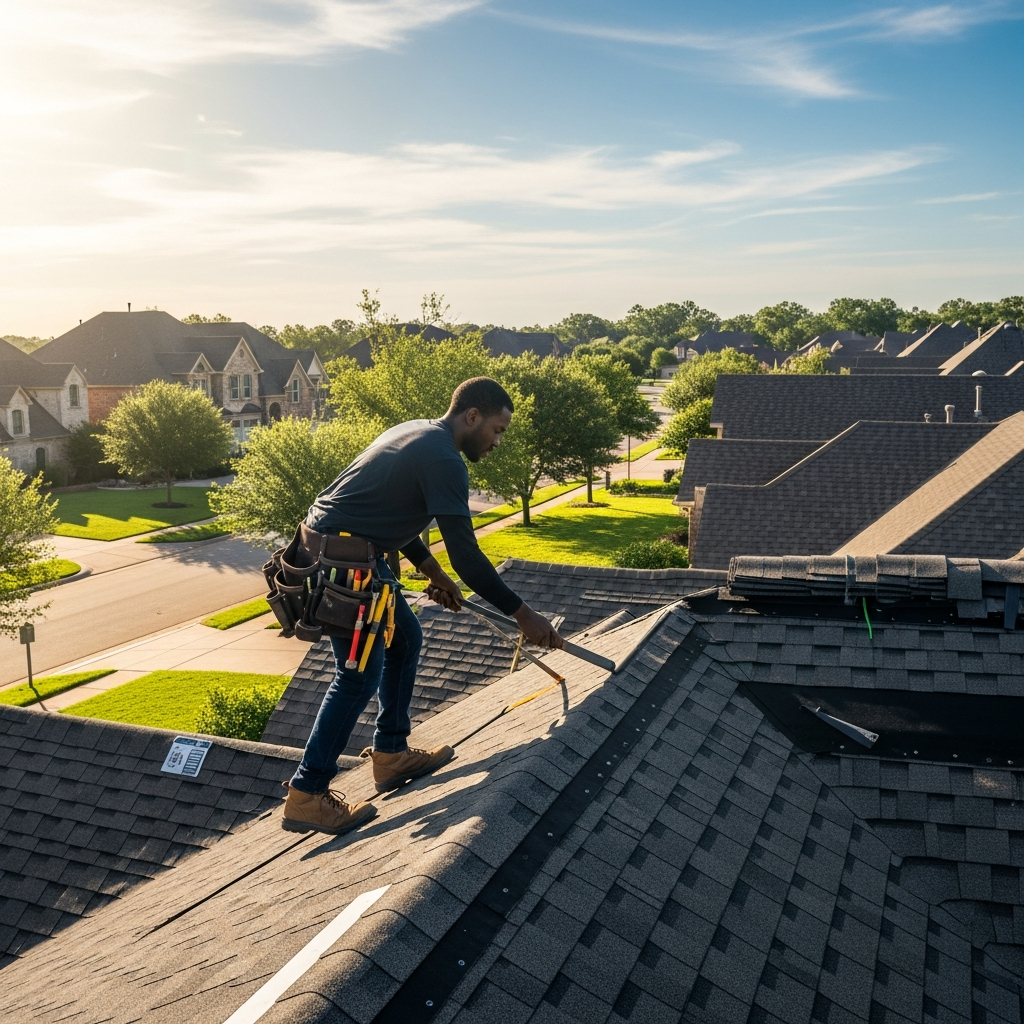
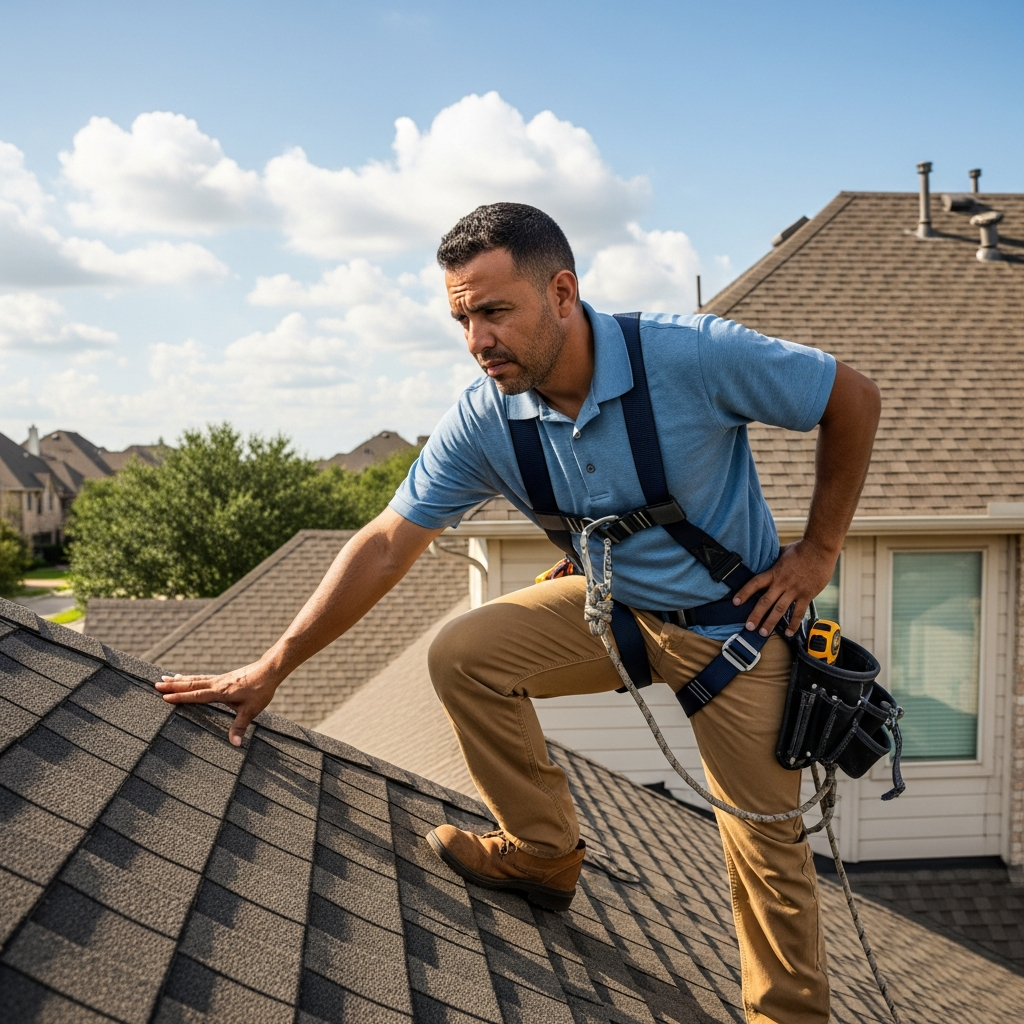
A professional roofing contractor knows exactly what to look for after a storm. They’ve seen hundreds of roofs in this region and they understand the specific damage patterns that this climate creates. That expertise? It genuinely matters.
What a Roof Actually Does (Beyond the Obvious)
Most of us think of a roof as… a roof. It keeps rain out. Simple. But there’s actually a whole system up there working together – the decking, underlayment, flashing around chimneys and vents, ventilation components, and then the shingles themselves on top. Each layer has a job. When one fails, the others get stressed trying to compensate.
Ventilation is the one that always surprises people. A poorly ventilated attic traps heat – we’re talking 150°F or more in a Dallas summer – which essentially slow-cooks your shingles from underneath while the sun is beating down from above. Double jeopardy. Good roofing companies understand attic ventilation as part of the whole roofing system, not just an afterthought.
Actually, that reminds me of something worth mentioning: a lot of homeowners discover ventilation problems only after their energy bills start climbing mysteriously. Your HVAC is working overtime because the attic is acting like an oven. It’s all connected.
The Insurance Piece (It’s Complicated)
Navigating roofing insurance claims in Texas is… genuinely confusing. There’s no sugarcoating that. Texas insurance policies have gotten more nuanced over the years, with separate wind and hail deductibles, depreciation clauses, and specific documentation requirements that vary by carrier. It’s not like filing a claim for a fender bender.
Experienced Dallas roofing companies have worked with local insurance adjusters hundreds of times. They know what documentation strengthens a claim, what language matters, and – importantly – when an adjuster has underestimated the scope of damage. That insider knowledge can mean the difference between a claim that covers a full replacement and one that barely covers a patch job.
Why “I’ll Get To It Eventually” Is Expensive
Here’s the honest truth about roofing: small problems move fast. A missing shingle is just an inconvenience. But that missing shingle lets moisture reach the underlayment, which softens the decking, which can compromise the structural framing over time. What started as a few-hundred-dollar repair quietly becomes a much bigger conversation.
In Dallas specifically, that timeline accelerates because of the heat and humidity cycling we get. Wood absorbs moisture, dries out, expands, contracts – repeatedly, rapidly. It breaks down faster than in more temperate climates. So the “wait and see” approach that might work fine in San Diego? Not really the right move here.
How to Actually Find a Good Dallas Roofer (Not Just a Cheap One)
Here’s something most homeowners don’t realize until it’s too late – the roofing industry in North Texas has one of the highest rates of storm-chasing contractors in the country. After every major hail event, trucks pour in from out of state, knock on doors, and disappear six months later when you need warranty work. So before you sign anything, search the Texas Department of Licensing and Regulation database. Takes two minutes. Tells you everything.
Ask specifically for contractors who carry manufacturer certifications – GAF Master Elite or Owens Corning Platinum Preferred are the big ones. These aren’t just fancy badges. They mean the company has met installation standards rigorous enough that the manufacturer will actually back the warranty. Without that, your “lifetime shingle” warranty might cover about as much as the paper it’s printed on.
Get the Estimate Right – Before Work Starts
Don’t accept a quote that just says “replace roof – $12,000.” That’s not a quote, that’s a number on a napkin. A legitimate Dallas roofing company will give you a detailed scope of work that includes the specific shingle product and grade, underlayment type, whether they’re replacing the decking if needed, how they’re handling flashing around chimneys and valleys, and what their cleanup process looks like.
Why does this matter? Because that’s where the corners get cut. A company can quote low by skipping synthetic underlayment, reusing old flashing, or leaving damaged decking in place. You won’t see any of that from the ground. You’ll just see a roof – until you don’t, because it’s leaking three years later.
Actually, flashing is worth calling out specifically. It’s the thin metal that seals roof transitions, and it’s probably the number one source of leaks in Dallas homes. Ask your contractor directly: *are you replacing or reusing the flashing?* Watch their answer carefully.
Timing Your Roof Replacement in Dallas
Dallas weather is… a lot. You’ve got brutal summer heat, spring hail, the occasional ice storm that shuts down the whole city. The sweet spot for roof work is typically fall or early spring – mild temps mean the shingles seal properly and crews aren’t working in 105-degree heat (which, honestly, affects quality more than most companies admit).
If you’ve just had hail damage, don’t panic and sign with the first contractor who knocks on your door. You have more time than they’ll tell you. Most Dallas homeowners have one year from the date of a storm to file an insurance claim, and a good roofing company will actually help you navigate that process – inspecting your roof, documenting damage with photos, and working directly with your adjuster. If a contractor tells you you *must* sign today or lose your chance… that’s your sign to walk away.
Working With Your Insurance Company
This is where a professional Dallas roofer genuinely earns their fee. The insurance claims process is confusing by design – depreciation, actual cash value versus replacement cost value, supplements for code upgrades… it’s a lot. Experienced local contractors have done this hundreds of times. They know which line items adjusters routinely lowball, they know to document O&P (overhead and profit) when a full roof replacement is involved, and they’ll make sure code-required upgrades like drip edge or ice and water shield are included in your claim.
One practical tip: never let your insurance company’s preferred contractor be the only one who inspects your roof. Get your own professional assessment first. You’re allowed to do this, and it often makes a significant difference in your settlement.
What a Real Warranty Looks Like
Before your contractor leaves that final day, you should have two things in writing: the manufacturer’s material warranty and the contractor’s workmanship warranty. In Dallas, anything less than a 10-year workmanship warranty from an established company is a red flag. Some of the better players offer 25 years on labor.
Keep those documents somewhere you can actually find them – not buried in email, not in the junk drawer. If you sell the house, a transferable warranty is a legitimate selling point that buyers and their agents will ask about.
The bottom line is this: roofing isn’t the place to find the lowest bid. It’s your home’s first line of defense against Texas weather, and Texas weather does not mess around. Hire accordingly.
When the Budget Reality Hits
Let’s be honest – the moment you get that first roofing quote, there’s a good chance your stomach drops a little. Dallas roofing projects aren’t cheap, and sticker shock is real. A full roof replacement can run anywhere from $8,000 to $20,000+ depending on your home’s size, pitch, and material choices. That’s not a small number.
The solution isn’t to immediately call three more companies hoping someone will magically be half the price. (They won’t be, and if they are, that’s actually a red flag worth paying attention to.) Instead, ask your roofing company about financing options upfront – most reputable Dallas contractors have payment plans, and some work with third-party lenders specifically for home improvement projects. You can also ask what’s driving the cost and whether there are material alternatives that hold up well in Texas heat without the premium price tag.
The “I Can’t Tell Good Work From Bad” Problem
This one trips up a lot of homeowners and honestly, it makes sense. You’re not a roofer. How are you supposed to know if the flashing around your chimney is done correctly or if those shingles are laid with proper overlap? It feels like you’re just… hoping for the best.
Here’s what actually helps: before work starts, ask the contractor to walk you through what quality looks like on your specific project. A good roofer won’t roll their eyes at this – they’ll appreciate that you care. Take photos throughout the project if you can, and don’t be afraid to ask questions mid-job. Get the warranty details in writing, both the manufacturer’s warranty on materials AND the contractor’s workmanship warranty. Those two things together give you real protection.
Actually, that reminds me – the workmanship warranty is often where corners get cut with lower-quality companies. A reputable Dallas roofer will typically offer at least a few years of workmanship coverage. If they won’t put it in writing? Walk away.
Scheduling and Weather Delays Are Just… Part of It
Dallas weather is unpredictable in the most dramatic ways possible. Hailstorm one week, scorching sun the next. If you’re scheduling a roofing project and expecting it to run like clockwork, prepare yourself – it probably won’t. Rain delays happen. Material backorders (especially post-storm when every contractor in the DFW area is suddenly swamped) are a genuine issue.
The honest solution here is to build mental flexibility into your timeline and get clear communication expectations set from day one. Ask your contractor: how will you update me if the schedule changes? What’s your typical response time for questions? A company that communicates proactively about delays is worth so much more than one that just goes quiet and shows up when they show up.
Navigating Insurance Claims Without Losing Your Mind
If you’re filing a storm damage claim – and in Dallas, there’s a decent chance that’s exactly why you’re getting a new roof – the insurance process can feel like a second job. Adjusters, line items, supplements, depreciation… it’s genuinely confusing, even for people who are good at paperwork.
The best roofing companies in Dallas have people who do this every day. They know how to document damage properly, what insurance companies typically look for, and how to advocate for a fair settlement on your behalf. Don’t just assume your first insurance offer is final – a good contractor can often help you identify damage that was missed in the initial inspection.
That said, be cautious of anyone who promises to “handle everything” in a way that feels too slick. You should always understand what’s being filed and why.
The Trust Issue – Because It’s Real
Finding someone you actually trust to work on your home is hard. There’s no getting around that. The roofing industry has its share of storm chasers and fly-by-night operations, especially in a hail-prone market like Dallas.
So do the boring-but-important homework: check the Texas Department of Licensing and Regulation, look up their Better Business Bureau rating, read actual Google reviews (not just the highlighted ones), and ask for local references you can actually call. A company with real roots in the Dallas community – not just a PO box and a magnetic truck sign – has something to lose if they do poor work.
It takes an hour of research. It’s worth every minute.
What to Expect Once You’ve Hired a Roofing Company
So you’ve done your research, gotten a few quotes, and you’re ready to move forward. Here’s where a lot of homeowners hit an unexpected wall – not because anything’s gone wrong, but because the timeline isn’t what they imagined. Let’s talk about what “normal” actually looks like, because it’s rarely the two-day turnaround people hope for.
First, there’s the scheduling gap. Reputable Dallas roofing companies – especially during storm season or the busy spring and fall months – are often booked out anywhere from two to four weeks. Sometimes longer. That’s actually a good sign. It means they’re in demand for a reason. If someone can start your job tomorrow, it’s worth asking yourself why their calendar is so open.
The Pre-Work Phase Takes Time (And That’s Okay)
Before a single shingle comes off your roof, your contractor will typically do a more thorough inspection than the initial estimate walk-through. They’re looking at decking condition, flashing details, ventilation – things that affect what materials they’ll actually need. This isn’t them dragging their feet. It’s them trying not to get halfway through your roof and discover a problem they weren’t prepared for.
Permits are part of this phase too. Dallas requires permits for most full roof replacements, and pulling them adds time. Could be a few days, could be a week depending on the municipality and current workload. Some homeowners don’t realize permits are involved at all and then feel frustrated by the delay. Now you know.
The Actual Work Is Faster Than You’d Think
Here’s the thing – once your crew actually shows up and work begins, it moves quickly. Most standard residential roofs in Dallas get torn off and replaced in a single day. Larger homes or more complex rooflines might stretch to two days. A full roof replacement that takes three days or more is relatively unusual unless there’s significant decking damage or weather delays.
Weather delays are real. Dallas summers are brutal, and thunderstorms roll through without much warning. A crew won’t (and shouldn’t) work on a wet roof – that’s a safety issue, not an excuse. Build some flexibility into your expectations and you won’t feel blindsided when Mother Nature has other plans.
After the Work: The Stuff People Forget to Ask About
This is the part nobody warns you about. Once the crew finishes, there’s still some loose ends to wrap up. The final inspection – either from the company’s project manager or a city inspector for permitted work – needs to happen before you get your paperwork. That inspection might be same-day or it might be scheduled a few days out.
You’ll also want to do your own walk-around. Look at the gutters, the driveway, the landscaping around the house. Good crews use magnetic rollers to pick up nails, but no process is perfect. Finding a nail in your tire a week later is… not fun. Actually, asking your contractor specifically about their cleanup process before work starts is just a good habit.
Warranty documentation sometimes takes a week or two to come through from the manufacturer, especially if you got a registered product warranty. Don’t panic if you don’t have it in hand the day work finishes – but do follow up if it hasn’t arrived within a month.
Managing the Financial Side Without Surprises
Reputable companies in Dallas typically ask for a deposit upfront – somewhere in the 25-50% range is pretty standard. Be cautious of anyone asking for full payment before work starts, and equally cautious of anyone who asks for nothing at all. The final payment usually comes due when the job is complete and you’re satisfied.
If you’re working with insurance after storm damage, the timeline gets more complicated. You’ll be coordinating between your adjuster, the roofing company, and sometimes a public adjuster if the claim gets tricky. That process can stretch to weeks or even months. It’s frustrating, but it’s normal.
A Realistic Bottom Line
From the day you sign a contract to the day your roof is done and inspected, you’re realistically looking at anywhere from two to six weeks for most projects – more if insurance is involved or if you’re in the middle of Dallas’s busiest season. That’s not a failure. That’s a proper job being done right.
The companies worth hiring aren’t the fastest ones. They’re the ones who show up when they say, communicate when things shift, and leave your property better than they found it.
So here’s the thing about your roof – it’s one of those parts of your home you almost never think about until something goes wrong. And in Dallas, when things go wrong, they tend to go *really* wrong. Hail the size of golf balls. Summer heat that just doesn’t quit. Those surprise storms that roll through and remind you exactly how much work your roof is actually doing up there.
That’s why this matters. Not in some abstract, “you should probably get around to it someday” kind of way – but in a real, tangible way that affects your wallet, your safety, and honestly, your peace of mind.
Professional roofers aren’t just people who nail down shingles. They’re the ones who catch the small stuff before it becomes the expensive stuff. They know Dallas building codes. They carry the right insurance so you’re not left holding the bag if something goes sideways. They have relationships with quality material suppliers, and – this is big – they can spot the warning signs that a well-meaning DIY inspection would totally miss. You know, the subtle things. The way flashing is starting to lift. The granules collecting in your gutters. The little signals your roof is sending before it starts sending them *through your ceiling*.
The money piece trips a lot of homeowners up, and honestly? That’s fair. A professional roofing job isn’t cheap, and sticker shock is real. But here’s a comparison that usually lands: a routine roof inspection and minor repair might run you a few hundred dollars. A full interior water damage restoration – mold remediation, drywall, flooring, the works – can run into the tens of thousands. The math isn’t complicated, even if the decision still feels hard.
And it’s not just about avoiding disaster. A well-maintained roof adds genuine resale value. It keeps your energy bills from quietly creeping up every summer. It keeps your family comfortable and dry. These things add up in ways that are easy to overlook when everything seems fine… but incredibly obvious when they’re not.
There’s also just something to be said for not carrying that worry around. Wondering if your roof is okay after every storm. Squinting up at it from the driveway trying to figure out if that looks normal or not. Letting a trusted professional take a look – and actually tell you where you stand – that’s worth something too.
—
If any of this is hitting close to home (pun maybe intended), we’d genuinely love to help. Whether your roof is showing its age, you just weathered a rough storm, or you simply haven’t had anyone look at it in a few years and you’re starting to wonder… reach out. No pressure, no scary sales tactics – just a real conversation about what your roof needs and what your options are.
Our team works with Dallas homeowners every day, and we understand that this stuff can feel overwhelming. We’re here to make it simpler. Give us a call or send us a message, and let’s figure out together what the right next step looks like for you and your home.
You don’t have to have it all figured out before you reach out. That’s literally what we’re here for.