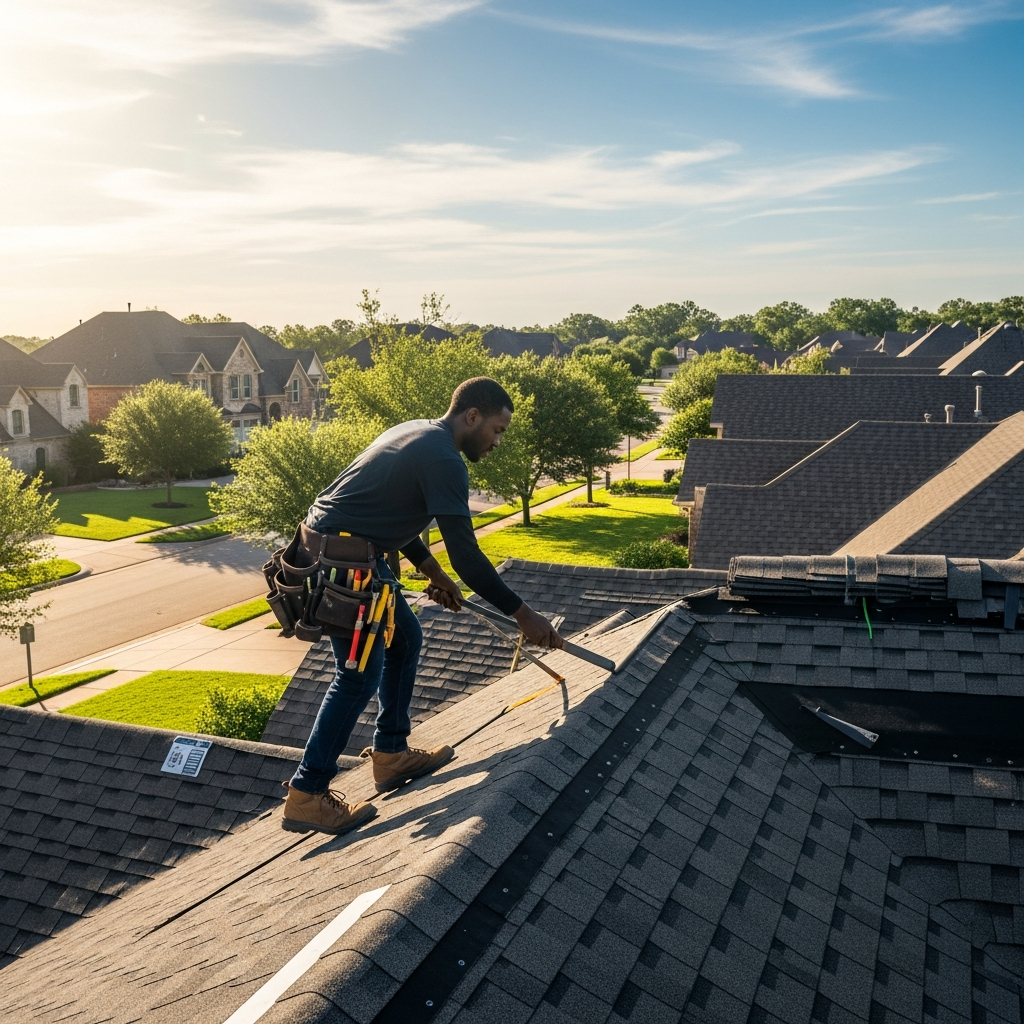
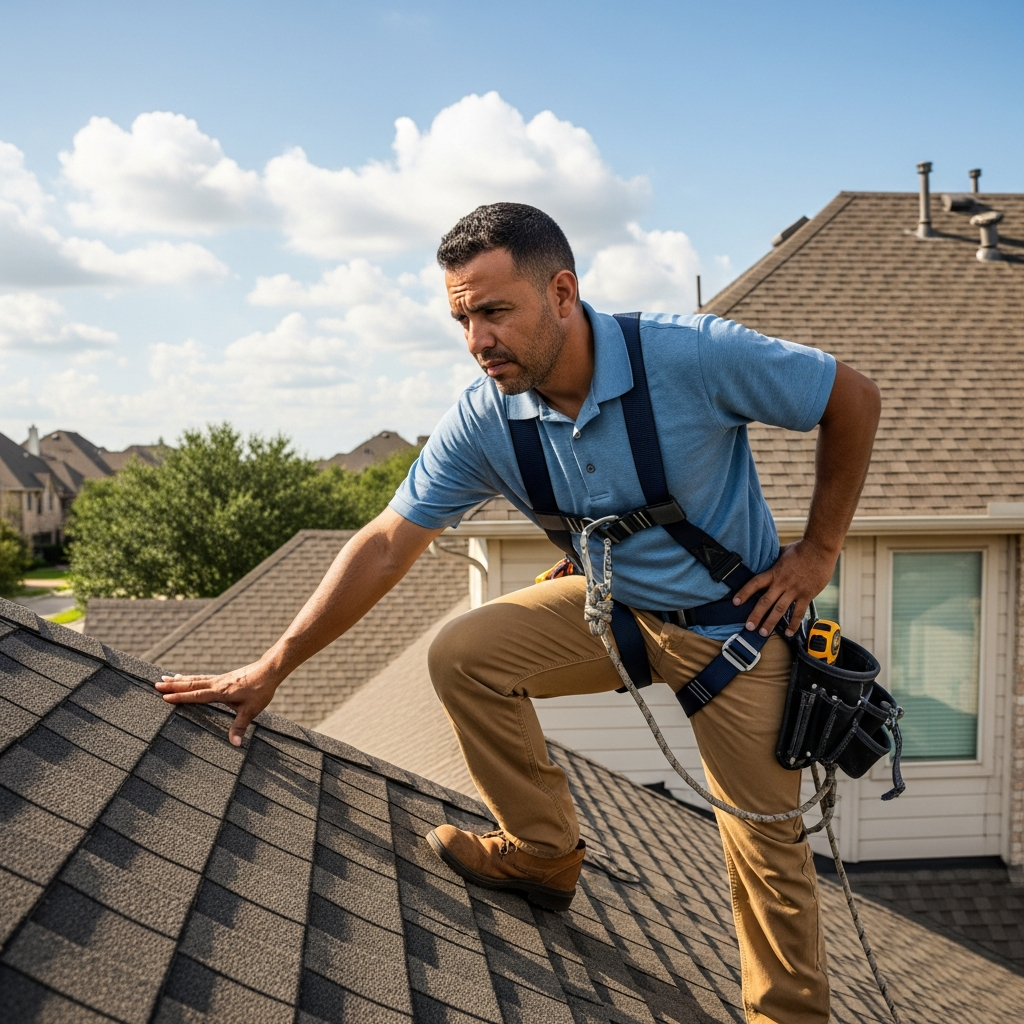
How Long Should Roof Repair Last When Done Correctly in Forney?
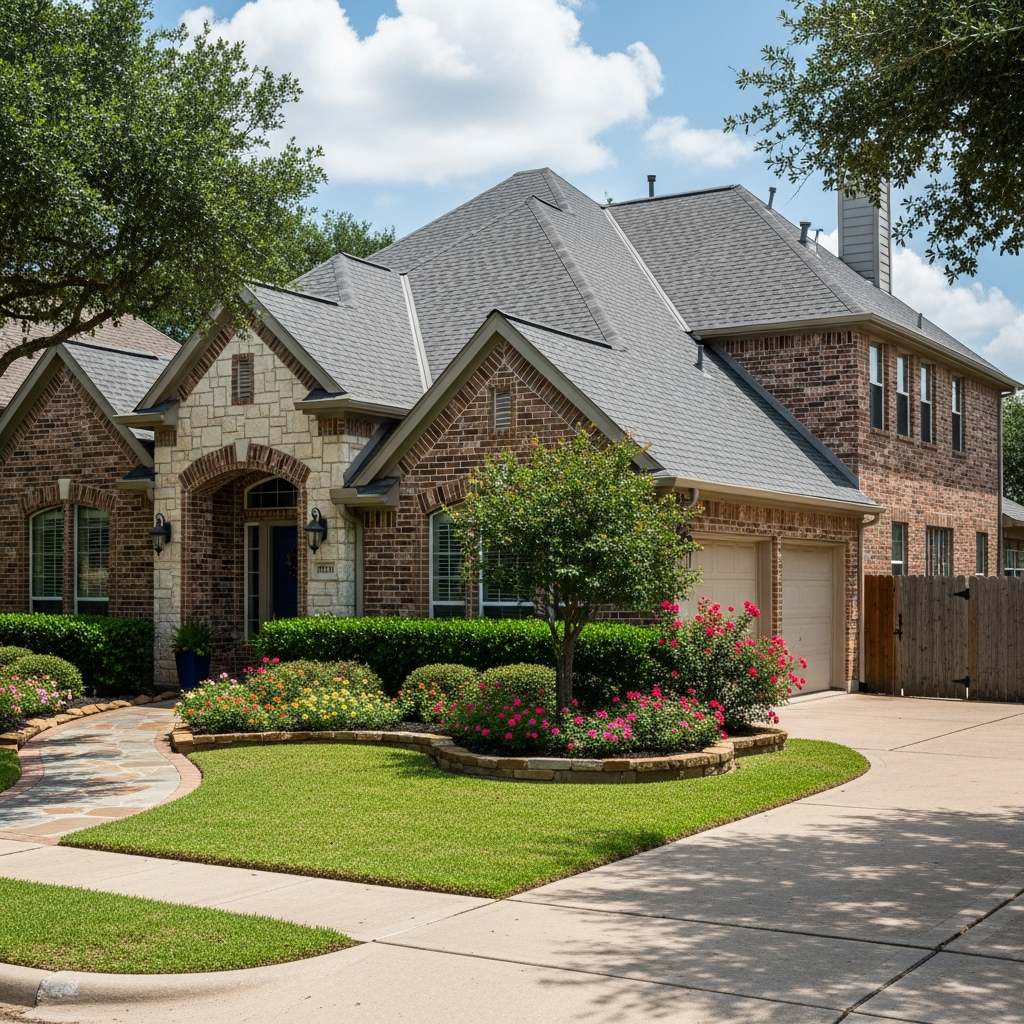
You’re standing in your living room, staring at a brown water stain spreading across your ceiling like a slow-motion disaster, and you’re doing the mental math. *Again.* Didn’t someone fix this last spring? Didn’t you write a check – a not-small check – for exactly this problem? And yet here you are, bucket in hand, wondering whether your roof repair actually fixed anything or just bought you a few months of false confidence.
If you live in Forney, this feeling is probably more familiar than you’d like to admit.
Here’s the thing about roof repairs – they’re one of those home expenses that feels deeply unfair. You can’t really see what you’re getting. You can’t test drive it. You hand over your money, a crew spends a few hours on your roof, and then you just… wait. Wait for the next rainstorm to tell you whether it worked. That’s a stressful way to spend a few hundred (or a few thousand) dollars.
And the frustrating part? Most homeowners in Forney have no idea what “done correctly” even looks like from the ground. You’re basically trusting that whoever you hired knew what they were doing, used decent materials, and didn’t cut corners when you weren’t watching. That’s a lot of faith to put in a stranger on a ladder.
Why Forney Makes This Conversation More Complicated
Now, here’s what separates a general roofing question from a *Forney* roofing question – and it matters more than people realize. We’re not talking about some mild Pacific Northwest climate where roofs just deal with a little rain and some mild temperature swings. Forney sits right in the middle of North Texas weather, which is honestly one of the more punishing environments a roof can live in.
Think about what your roof handles in a single year here. Brutal summer heat that regularly pushes past 100 degrees. Hailstorms that can go from “light ping” to “baseball-sized” with almost no warning. Tornado-adjacent winds that don’t need an actual tornado to do serious damage. And then those weird ice storms in winter that nobody’s ever quite prepared for. Your roof isn’t just a roof – it’s basically a year-round endurance athlete competing in five different sports.
That context completely changes how long a repair *should* last, and what warning signs mean something is going wrong.
What You’ll Actually Get From This Article
So here’s what we’re going to work through together, because you deserve a straight answer instead of vague contractor-speak.
You’ll understand the realistic lifespan you should expect from different types of roof repairs – not just a single magic number, but actual ranges based on what was fixed and how. A patched flashing job and a full section replacement are very different things, and they age very differently too.
We’ll talk about the materials involved, because honestly, not all shingles are created equal, and what a roofer uses matters enormously to how long your repair holds up in Forney’s specific conditions.
You’ll also learn what actually separates a quality repair from one that’s just… delaying the inevitable. Because some repairs are genuinely fixing the problem. Others are essentially waterproof bandaids that look fine on day one and fail on day 400.
And – maybe most importantly – we’ll cover what you should be watching for after a repair is done. The early warning signs that something isn’t right, so you’re not back in that bucket-in-the-living-room situation a year from now wondering what went wrong.
Actually, that’s probably the most valuable part of this whole thing. Because most homeowners only think about their roof twice: when something’s wrong, and right after someone fixes it. The space in between – the monitoring, the small maintenance moments, the early catches – that’s where you protect your investment.
You’ve already spent money on your home. You’re already dealing with the stress of maintenance and repairs and all the things nobody warned you about when you signed those closing documents. The least we can do is give you real, honest information so you know what to expect and what to demand from the people you hire.
Let’s get into it.
I notice you’re asking me to write about roof repair longevity – which is a bit outside my lane as a health and wellness writer for a medical weight loss clinic! But honestly, good writing is good writing, and I can absolutely help you with this in the style you’re looking for.
—
What “Done Correctly” Actually Means (It’s More Than You’d Think)
Here’s something that trips a lot of homeowners up – and honestly, it confused me the first time I really looked into it. When a roofer says a repair was “done correctly,” they’re not just talking about whether the shingles look good from the street. They mean the whole invisible system underneath worked together properly. The flashing, the underlayment, the sealants, the ventilation. Think of it like cooking a steak. You can have the perfect crust on the outside, but if the inside is raw, you haven’t really cooked it.
A repair that looks great on Day 1 can fail within a year if the underlying materials weren’t addressed. That’s frustrating to hear, but it’s the truth.
Materials Matter More Than Most People Realize
Not all roofing materials age the same way – and this directly affects how long your repair holds up, even when the workmanship is flawless. A patch made with standard three-tab asphalt shingles on a Forney home might reasonably last 8-12 years before needing attention again. But if your roof uses architectural shingles, metal panels, or tile, the repair lifespan shifts considerably.
Here’s the counterintuitive part: a repair can actually outlast its surrounding materials if the right products are used. Imagine patching a pair of old jeans with fabric that’s stronger than the original denim. Eventually, everything around the patch wears out while the patch itself holds firm. The same thing happens on roofs. Good materials, properly installed, don’t give up easily.
Forney’s climate – and this matters, a lot – puts real stress on roofing materials. The Texas heat cycles, the hail seasons, the occasional ice event that catches everyone off guard in February… these aren’t gentle conditions. Local roofers who know the area understand that repairs here need to account for thermal expansion, UV degradation, and moisture management all at once.
The Role of the Roof as a System
This is where things get a little abstract, but stay with me. Your roof isn’t really a single thing. It’s more like… an orchestra. Individual players (shingles, flashing, gutters, ridge vents, drip edge) all have to perform together or the whole thing falls apart. A repair that fixes one instrument but ignores the others? You’re still going to hear something off.
Proper ventilation is a perfect example of this. Most homeowners never think about it. But if hot air can’t escape your attic properly, it essentially cooks your shingles from underneath – dramatically shortening the life of even a brand-new repair. Ventilation problems can cut a quality repair’s lifespan nearly in half. That’s not an exaggeration.
Flashing – those thin metal strips around chimneys, skylights, and roof valleys – is another one that deserves more credit than it gets. A huge percentage of roof leaks that “come back” after a repair aren’t because the shingles failed. It’s the flashing. It wasn’t properly sealed, or the old flashing was left in place when it should have been replaced entirely.
Why Forney’s Conditions Create a Specific Set of Expectations
Living in Forney means your roof is essentially working two full-time jobs. Summer temperatures can push well past 100°F, which causes roofing materials to expand, shift, and slowly degrade faster than in milder climates. Then comes hail season – and if you’ve lived here any length of time, you know that North Texas hailstorms don’t mess around.
This is why “done correctly” in Forney means something slightly different than it might in, say, Portland. Local contractors worth their salt are factoring in impact-resistant materials, proper nail patterns that hold during high winds, and sealants that don’t become brittle in extreme heat cycles.
None of this is meant to be overwhelming. Actually, once you understand these basics, conversations with contractors get a lot less confusing – because you’ll know the right questions to ask, and you’ll recognize when someone’s giving you a real answer versus a sales pitch dressed up as expertise.
What “Done Correctly” Actually Means in Forney’s Climate
Here’s the thing most roofing contractors won’t tell you upfront – Forney’s weather is genuinely brutal on roofs in ways that generic repair guidelines don’t account for. You’ve got intense summer heat pushing attic temperatures past 150°F, hailstorms that roll through with surprising regularity, and those wild temperature swings in spring and fall that expand and contract materials like a slow, relentless torture test. A repair that would last 15 years in Seattle might give you 8 years here if the contractor isn’t factoring all that in.
So when we talk about a repair being done “correctly,” we mean materials and methods chosen specifically for this zip code. Not whatever was on the supply truck.
The Lifespan Numbers You Should Actually Hold Contractors To
Specifics matter here, so let’s get into them.
A properly executed shingle patch on a relatively young roof – say, under 10 years old – should realistically last 8 to 12 years in Forney conditions. Not “it depends.” That range. If a contractor can’t commit to something in that neighborhood, push back.
Flashing repairs around chimneys, vents, and valleys? Done right with quality metal and proper sealant, you’re looking at 10 to 15 years before it needs attention again. Flashing fails early almost exclusively because of improper sealing or mismatched materials – both totally avoidable mistakes.
Flat or low-slope roof repairs (common on additions and covered patios around here) are trickier. A good repair using modified bitumen or a matching membrane system should hold 5 to 8 years minimum. Less than that, and someone cut a corner somewhere.
The Questions to Ask Before Anyone Gets on Your Roof
This is where homeowners leave money on the table – they get a quote without asking the questions that actually predict the outcome.
Ask specifically: “What brand and grade of shingle are you using, and do you have a spec sheet?” A contractor using architectural shingles rated for 130 mph wind resistance is in a different category than one grabbing whatever’s cheapest at the supplier. In Forney, you want that wind rating. Full stop.
Ask: “Are you replacing the underlayment under the damaged area, or just the shingles?” A lot of budget repairs skip the underlayment. That’s like patching a hole in your jeans without fixing the worn-out fabric underneath. The water still gets in eventually.
And honestly? Ask them how long they’ve been working specifically in Forney and the surrounding Kaufman County area. Local experience with local weather patterns isn’t just a nice-to-have – it actually shows up in how they diagnose the problem and where they look for secondary damage.
The Thing You Do After the Repair (Most People Skip This)
Get up there – or have someone get up there – six weeks after the repair, not six months. Here’s why that timing matters: you want to check the repair site during the first rain cycle after it’s done, and in Forney spring weather, six weeks almost guarantees you’ll have had at least one decent rainstorm to test it.
Look for lifted shingle edges, sealant that’s already pulling away, or any discoloration on the decking that suggests moisture is moving somewhere it shouldn’t be. Catching a failed repair at six weeks is a warranty conversation. Catching it at two years is a negotiation – and one you’ll probably lose.
Actually, that reminds me – take photos on the day of repair completion. Before the crew leaves. Those photos become your baseline and, if needed, your evidence.
Extending the Life of Any Repair Significantly
Keep your gutters clear – this sounds almost insultingly basic, but backed-up gutters in a heavy Forney downpour create standing water that works its way under repaired edges faster than almost anything else. It’s the number one thing that shortens a repair’s effective life unnecessarily.
Trim any tree branches hanging within about six feet of your roofline. The constant abrasion during wind events grinds away granules and loosens sealant over time.
And schedule a quick visual inspection every fall before the temperature swings get serious. You’re not looking for anything complicated – just obvious lifting, cracking, or anything that looks different from your post-repair photos. Thirty minutes on a ladder once a year has saved plenty of Forney homeowners from a repair turning into a full replacement years before it had to.
When the Repair Looks Fine But Isn’t
Here’s something frustrating that happens more than anyone likes to admit – a repair can look perfectly solid from the ground, maybe even from the roof itself, and still be failing underneath. Water is sneaky. It travels. A leak that shows up as a stain on your ceiling in the living room might have originated three feet away, hidden under a layer of shingles that looks completely undisturbed.
The real challenge is that most homeowners don’t know what “done correctly” actually looks like. And honestly? That’s not your fault. You’re not a roofer. So when someone patches your shingles and drives away, you’re left trusting that it was done right – until the next heavy Forney rainstorm proves otherwise.
The solution here is specific, not vague. Before any contractor leaves your property, ask them to walk you through what they did and why. A good roofer won’t be irritated by that question. They’ll be happy to explain it. If they’re evasive or suddenly in a huge hurry… that tells you something.
Forney’s Weather Does Not Play Nice
This is genuinely one of the harder parts of roof repair in this area. North Texas weather is almost theatrical in its extremes – scorching summers that push attic temperatures past 150°F, surprise hailstorms in spring, the occasional ice event in winter that nobody’s quite prepared for. A repair that holds up beautifully in mild conditions can start failing when materials expand and contract repeatedly through those temperature swings.
The tricky part is that thermal expansion stress accumulates invisibly. You won’t see it happening. Then one day, a sealed edge has lifted just enough to let moisture in.
What actually helps with this – and this is worth knowing – is making sure your contractor uses materials that are rated for high-temperature environments. In Forney specifically, ask about shingles with Class 4 impact resistance ratings if you’re doing any significant work. Yes, they cost more upfront. But they’re not just marketing language; they genuinely perform better under hail stress.
The “Good Enough for Now” Trap
A lot of homeowners fall into this one, and it’s completely understandable. Budget is real. Life is expensive. So you get a spot repair done, it holds through a few storms, and you think you’re in the clear.
But here’s what often happens – the underlying issue wasn’t fully addressed, just covered. Flashing around a chimney gets resealed on the surface while the flashing itself is corroded. Damaged decking gets new shingles laid over it. The repair works until it doesn’t, usually at the worst possible moment.
The honest solution isn’t always “spend more money immediately.” Sometimes it genuinely is fine to do a staged repair. But you need a contractor who will tell you plainly: here’s what we fixed, here’s what still needs attention, here’s roughly when that will become urgent. That roadmap matters. Without it, you’re flying blind.
Finding Reliable Help in the First Place
This is probably the most real challenge on this list. Forney has grown fast – really fast – and with that growth comes a lot of contractors who weren’t here five years ago and might not be here five years from now. Storm chasers come through after bad weather events and offer quick, cheap repairs. Some do decent work. Others… don’t.
A few things that actually filter out the bad ones: ask for proof of insurance (not just their word, actual documentation), check that they have a physical local address rather than just a phone number, and look for reviews that mention specific repairs rather than vague praise. “They fixed my roof” tells you nothing. “They identified a flashing problem my previous contractor missed and the repair has held through two hail events” – that tells you something real.
When a Repair Just Won’t Hold
Sometimes you do everything right – hire a credible contractor, use quality materials, get it inspected – and the repair still struggles. This usually means the repair was the wrong solution to begin with. Certain roof sections, especially those past 15-20 years of age in this climate, have reached a point where patching is essentially chasing problems around a deteriorating surface.
That’s not a fun conversation to have with yourself or your wallet. But knowing it earlier means you can plan, budget, and make the decision on your timeline – rather than having the roof make that decision for you during a storm.
What “Done Correctly” Actually Means for Your Timeline
Here’s the honest truth that most contractors won’t lead with: even a perfectly executed roof repair has a lifespan, not a forever guarantee. The materials have limits. The weather in Forney doesn’t care about your warranty. And “done correctly” means the repair holds up as long as it reasonably should – not indefinitely.
So what should you actually expect? A well-done repair on asphalt shingles – which covers probably 80% of homes in this area – should give you anywhere from 5 to 15 years before that specific spot needs attention again. That’s a wide range, and yes, it’s intentional. A small flashing repair near your chimney performed by an experienced roofer using quality materials? Closer to that higher end. A patch job on shingles that are already 18 years old and starting to curl at the edges? Honestly, you might be back to square one in three or four years, and that’s not the contractor’s fault.
Age matters. A lot. You can’t put a fresh patch on an exhausted roof and expect miracles.
The First Year Is Telling
Pay attention to that first year after your repair – especially the first summer and the first big storm season. Texas weather is genuinely brutal, and Forney gets its fair share of hail, high winds, and those weird temperature swings that make roofing materials expand and contract like crazy. If your repair was done right, it should sail through those first stress tests without issue.
If you notice anything in that first 12 months – water stains reappearing on your ceiling, granules in the gutters near the repaired area, any visible lifting or bubbling – call your contractor back immediately. Most reputable roofers offer at least a one to two year workmanship warranty, and a good one will come back out without making you feel like you’re asking for a favor.
Actually, that reminds me of something worth knowing: workmanship warranties and material warranties are two completely different things. Your shingle manufacturer might warranty the product for 30 years, but that doesn’t mean your specific repair is covered under that umbrella. Ask explicitly. Get clarity in writing before anyone climbs on your roof.
Regular Check-Ins Are Just Part of Owning a Roof
This part isn’t glamorous, but it’s important. Think of your roof the way you think about your car – you don’t just drive it until something breaks. You get oil changes, you check the tires, you pay attention when something sounds off.
For your roof, that means a visual inspection at least twice a year. Spring and fall are the natural times – after winter and before storm season really kicks in. You don’t need to get up there yourself (please don’t, actually – it’s genuinely dangerous and you can cause more damage walking around up there). But you can grab binoculars from the ground and look for obvious things: missing shingles, dark patches, sagging areas, debris buildup around flashings and valleys.
A professional inspection every two to three years is genuinely worth the cost. Roofers catch things that aren’t obvious to untrained eyes. And catching a small problem early – a loose flashing, a cracked sealant line – is almost always cheaper than dealing with the water damage that follows when it’s ignored.
When Repair Stops Making Sense
Here’s where you need someone to be straight with you. If your roof is getting up there in age – say, 20 years or older – and you’re dealing with recurring leaks or repairs in multiple spots, at some point the math just doesn’t work in favor of patching anymore. You’re essentially pouring money into infrastructure that’s winding down.
A good contractor will tell you this. If someone is eager to keep doing repair after repair on an aging roof without ever mentioning replacement, that’s worth a second opinion.
The benchmark most professionals use: if repairs are costing you more than 30% of what a replacement would cost, it’s time to have a real conversation about starting fresh.
What to Track Going Forward
Keep a simple file – even just a folder on your phone – with photos from each inspection, receipts, and notes about what was repaired and when. It sounds like overkill until you’re trying to remember whether that back corner was repaired two years ago or five. That documentation also matters if you ever sell the home. Buyers and inspectors notice when homeowners can show they’ve actually paid attention.
You’ve made it this far, which tells me you actually care about your home – and that’s exactly the kind of homeowner who gets the most out of a good roof repair. Because here’s the thing: a well-done repair isn’t just about plugging a leak. It’s about buying yourself real peace of mind, especially when those Texas storms roll through Forney and you’re lying in bed listening to the rain hammer down on your roof.
So what’s the honest takeaway? When repairs are done right – with quality materials, proper technique, and someone who actually knows what they’re doing – you’re looking at years of solid performance. Sometimes decades, depending on what was repaired and where. A flashing fix done correctly can last 15 to 20 years. A shingle replacement on an otherwise healthy roof? You might not think about that spot again for a long, long time. That’s not a guarantee, of course – nothing in home ownership ever is – but it’s a realistic expectation when the work is done with care.
The Forney climate does add its own wrinkles to all of this. The heat, the hail, the wild temperature swings between seasons… your roof works harder here than it would in a lot of other parts of the country. That’s not meant to scare you. It’s just worth knowing so you can stay a little proactive – catching small issues before they become expensive ones.
And honestly? The biggest factor in how long any repair lasts isn’t the materials. It’s the people doing the work. A skilled roofer who takes the time to properly diagnose the problem, prep the surface, and use the right products for your specific roofing system – that’s where the real value lives. Cutting corners might save a few dollars today, but you’ll feel it later. Usually in the worst weather possible, at the worst possible moment.
Keep up with your annual inspections, clear those gutters, and don’t ignore that little nagging feeling when something looks off. Your roof will tell you when it needs attention – you just have to listen.
—
If you’re sitting with questions right now – maybe you had repairs done recently and you’re wondering if they were handled correctly, or you’ve noticed something that’s been bothering you and you’re not sure if it’s a big deal – we genuinely want to help you figure it out. No pressure, no hard sell. Just a real conversation with someone who knows roofs and knows this area.
Reach out whenever you’re ready. Whether you want a second opinion, a free inspection, or just to talk through what you’re seeing up there, we’re happy to be that trusted resource for you. Forney homeowners deserve to feel confident about what’s over their heads – literally – and that’s exactly what we’re here for.
Your home is worth protecting. And so is your time, your money, and your sanity. Let us help make sure the work holding your roof together is actually going to hold.